Panak Island: a guide to sea caves and hidden lagoons
Panak Island is a sea-cave stop on Twilight Sea Canoe's Phang Nga Bay itinerary from Phuket. You approach on the tour boat, then explore accessible passages with a professional canoe paddler. The appeal is the change in perspective: open water and high cliffs give way to close rock walls, shade and sheltered lagoons. The tide and conditions determine the route.
In this article
Where Panak fits into a day on the bay
You may see the name written as Panak, Phanak or Koh Panak when researching Phang Nga Bay. Check the surrounding itinerary rather than assuming every spelling refers to a different excursion. On Evening Glow, Panak forms part of a longer journey that also includes Hong Island, James Bond Island, meals on board and an evening paddle.
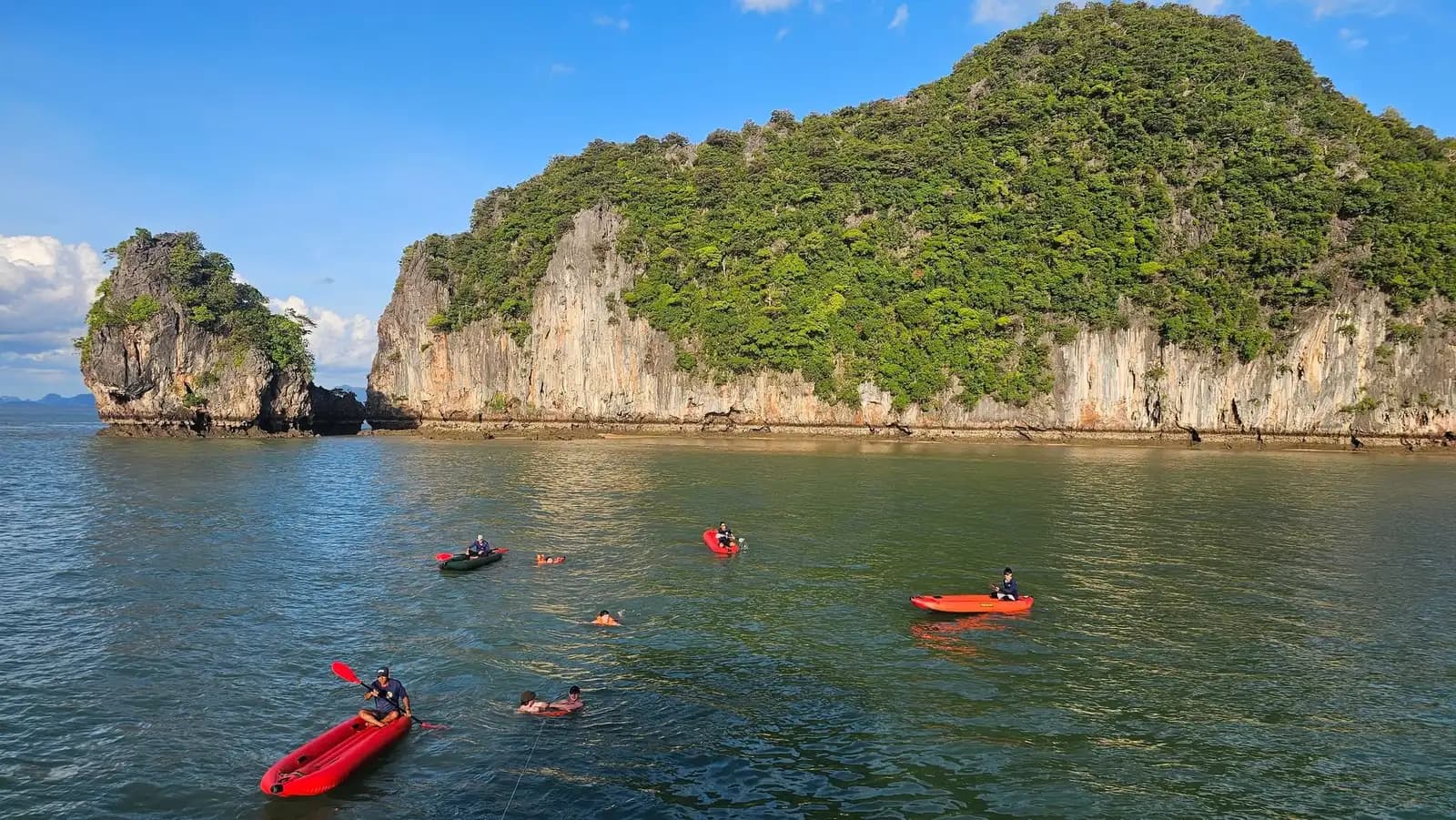
Treat the island as a canoeing destination rather than a beach stop with a fixed walking circuit. The main boat provides the transfer through the bay, while the smaller canoe lets your guide approach the shoreline and suitable passages. You do not need to arrange a separate ferry connection for this stop when joining our tour. Read the full itinerary to see how Panak fits alongside the other experiences and how much of your day to keep free.
The cave journey is about changing space
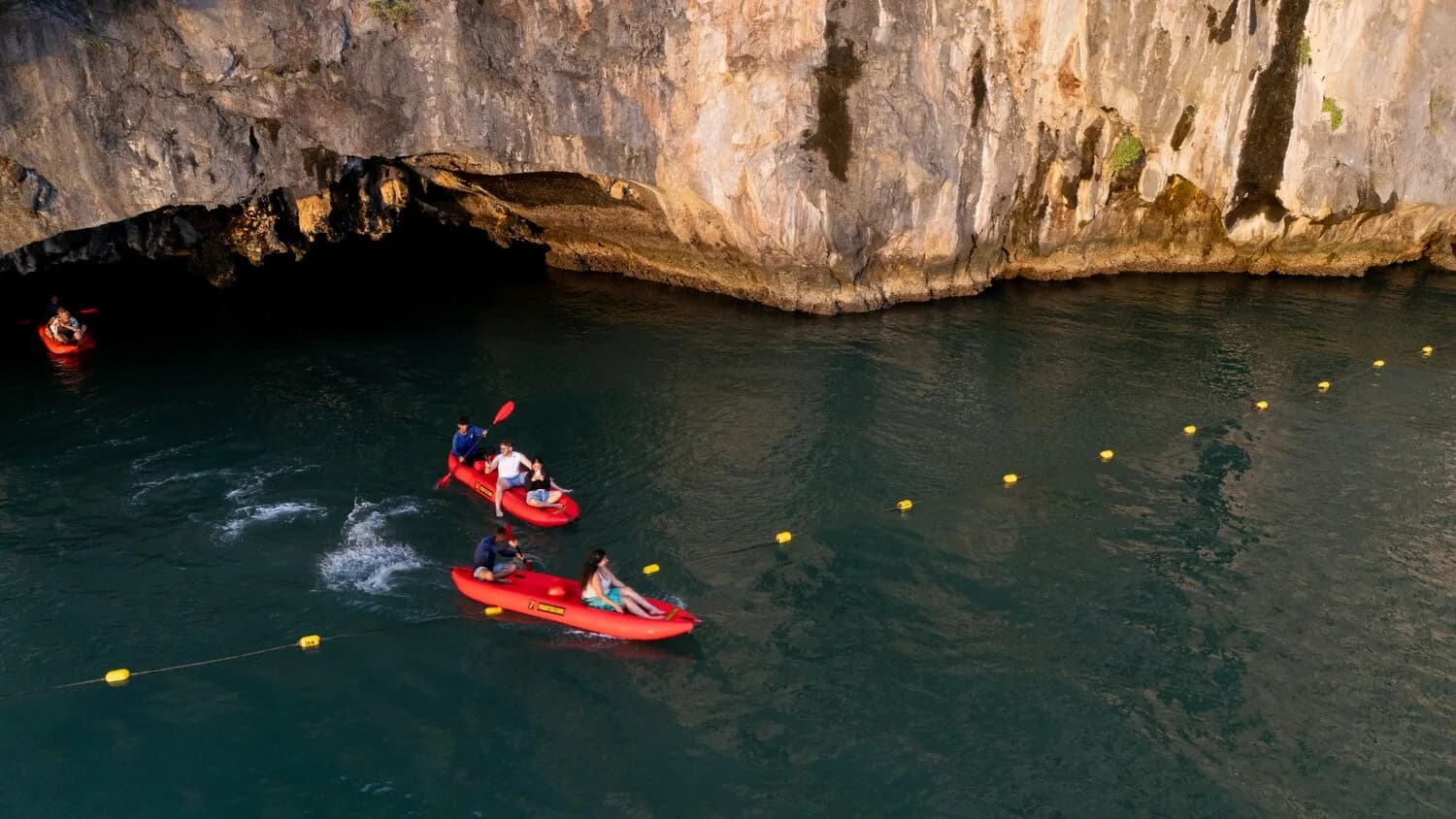
From the main boat, you notice the scale of the limestone. At water level, you can see the details of its surface and the difference between a broad opening and a lower passage. As your paddler approaches a cave, listen for instructions and give yourself time to look without trying to record every moment. The transition from bright water to shadow is part of the experience.
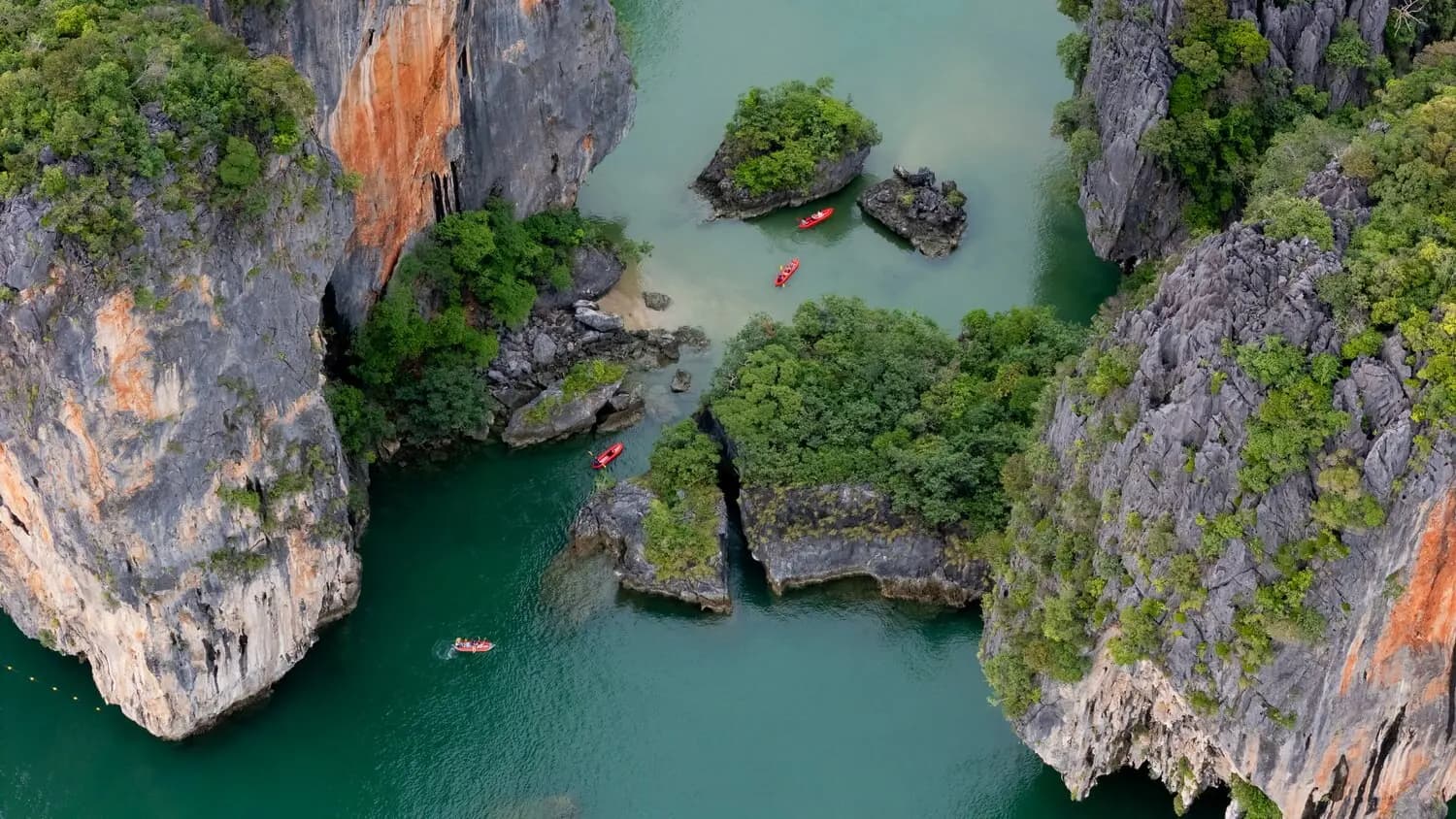
A sheltered lagoon can feel quite different from the water outside, with vegetation and rock walls around you. Visitors often encounter the word “hong” in descriptions of these enclosed spaces. That word describes a feature of the landscape as well as appearing in an island name elsewhere in the bay. You can read about the separate Hong Island visit without assuming that every lagoon in a Panak itinerary is that island.
Why your guide checks the tide
The amount of space beneath a cave roof changes as the water level changes. An opening that looks straightforward in a photograph may present a different passage on your visit. The guide must consider the conditions at the entrance and the journey through and back out. That judgment matters more than matching the route to a picture or a named cave on a travel list.
Do not use a general tide chart to plan an independent cave entry or insist on a particular tunnel. Access also involves local knowledge and conditions at the site. Your crew may alter the order of the tour or choose another route. Keep some flexibility in what you expect to see. The Ramsar information sheet for the bay describes its tidal setting, but it is background ecological information, not an access guide for today's canoe trip.
What you need to do in the canoe
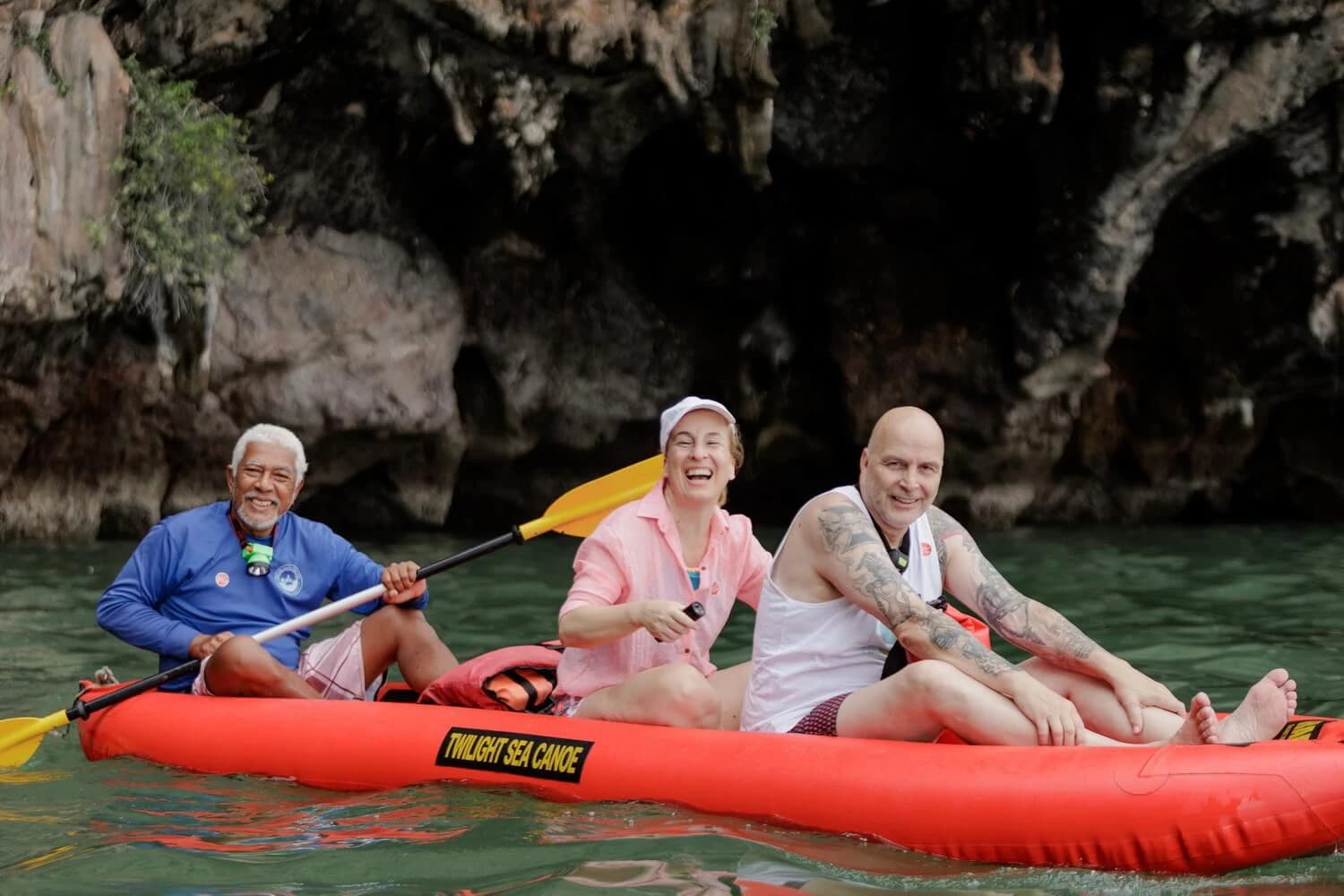
Your paddler steers, but your attention still matters. Stay seated as instructed and ask before shifting position for a photograph. If the guide asks you to lean back or lower your head, put the camera away and follow the instruction. Keep your hands and belongings clear of the rock. There is no need to test the clearance yourself or push against a cave wall.
A low or enclosed passage may not suit everyone. If you worry about confined spaces, have difficulty changing posture, or need assistance boarding, speak to the team before booking. Explain the practical concern in your own words so they can advise on the actual activity. Check the participation requirements as well. A guide doing the paddling does not remove the need to assess whether the seating, boat transfers and cave setting will suit you.
Pack for shade, splashes and boat transfers
Choose clothes that remain comfortable if they get splashed, and footwear that stays secure while boarding. Keep the load small enough to manage without distracting yourself from the crew. The package includes a dry bag for belongings, but its usefulness depends on closing it correctly and keeping it within its capacity. Ask for help if you have not used one before.
If you carry a phone or camera, think through how you will put it away quickly when instructions begin. A loose device balanced on your lap is awkward when you need both hands free. Expect different light levels rather than guaranteed bright photographs inside a passage. Capture a few images where it is comfortable to do so, then spend time looking at the rock and vegetation around you. The supplied photographs illustrate canoeing conditions and the wider bay setting; a named passage is never promised from an image.
- Keep a small bag and secure loose items before entering the canoe.
- Wear the safety equipment supplied and follow your paddler's directions.
- Ask about enclosed spaces or mobility needs before reserving.
- Let the guide choose the accessible route for the conditions.
Choose an itinerary that leaves room for the caves
If cave canoeing is your main reason to visit Phang Nga Bay, look beyond the number of islands in a headline. Check whether the itinerary includes guided canoe sessions and what the rest of the day involves. A stop list packed with landmarks does not tell you how the visit will feel, how you travel between stops or whether the schedule fits your interests.
Evening Glow combines the Panak visit with other bay experiences and continues after sunset. That suits travellers who want a day-to-evening journey, but it requires more time than a short sightseeing outing. Use our tour planning guide to understand the transfers and return. When you are ready, check the current package and ask our team any questions about cave access or suitability before selecting your date.
Questions before you go
Do I need to paddle through the caves myself?
A professional paddler handles the guided canoe sections. You follow their instructions about seating, posture and moving between boats.
Will I visit the same cave shown in a photograph?
That cannot be promised. Guides choose accessible routes according to tides and conditions, so photographs should give context rather than define an exact route.
Is Panak Island the same as Hong Island?
They are separate stops on the published Evening Glow itinerary. The word hong also appears in descriptions of enclosed lagoons, which can make travel accounts confusing.